“What if King David never existed?”
For decades, a growing number of scholars argued that David was nothing more than a legend. A myth. A fictional hero invented by later writers to give ancient Israel a glorious backstory it never actually had.
If you’ve ever had someone challenge you with, “There’s no proof David was real,” I get it. I’ve been there. And for a long time, the skeptics seemed to have the upper hand.
Then a team of archaeologists found a broken piece of black basalt in northern Israel, and everything changed.
The Summer of 1993
Picture this: It’s a hot July day in 1993 at Tel Dan, an archaeological site in the upper Galilee region of Israel. Avraham Biran, a veteran Israeli archaeologist, has been excavating this site for years. His team member, Gila Cook, is surveying a section of ruins when she notices something unusual embedded in a wall.
It’s a fragment of stone. Dark basalt. And there’s writing on it.
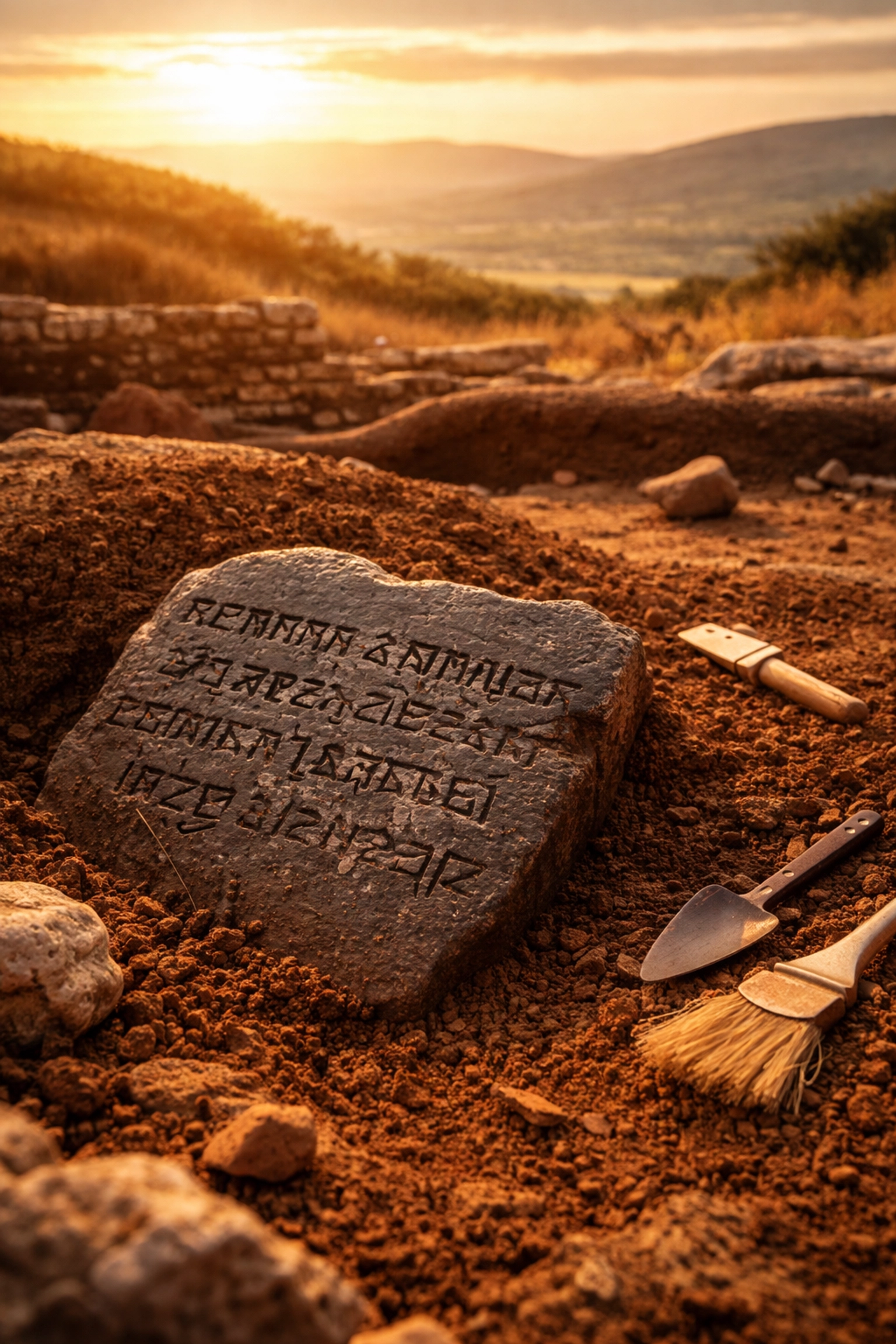
What Cook had stumbled upon would become one of the most significant archaeological discoveries of the twentieth century. The team found additional fragments the following year, and as scholars pieced the inscription together, the implications became clear.
This wasn’t just another ancient artifact. This was a game-changer.
What Does the Stone Actually Say?
The Tel Dan Stele: “stele” simply means an upright stone slab with an inscription: contains text written in Aramaic, the common language of the ancient Near East. Dating to the 9th century BCE, that puts it roughly 150 years after David’s reign.
The inscription commemorates a military victory. Specifically, it appears to be a boast from Hazael, king of Aram-Damascus, celebrating his defeat of two enemy kings. And here’s where it gets interesting.
In the ninth line of the inscription, archaeologists found two words that sent shockwaves through academic circles: bytdwd.
Translated? “House of David.”
Let that sink in for a moment. Here was an ancient enemy of Israel: not a Hebrew writer, not a religious text, but an adversary: casually referring to the “House of David” as if it were common knowledge. As if everyone knew exactly what that meant.
The kings Hazael defeated are believed to be Jehoram of Israel and Ahaziah of Judah, which aligns remarkably well with the biblical account in 2 Kings. But the real significance wasn’t just the military details: it was the matter-of-fact acknowledgment that David founded a dynasty.
Why This Matters More Than You Might Think
Before 1993, skeptics had a fairly strong position. “Show me one piece of evidence outside the Bible that David existed,” they’d say. And honestly? We couldn’t.
The Bible described David as a shepherd boy who killed a giant, became king, united Israel, and established Jerusalem as his capital. It’s an incredible story. But incredible stories invite skepticism, and without external corroboration, critics dismissed David as legendary: no more historical than King Arthur.
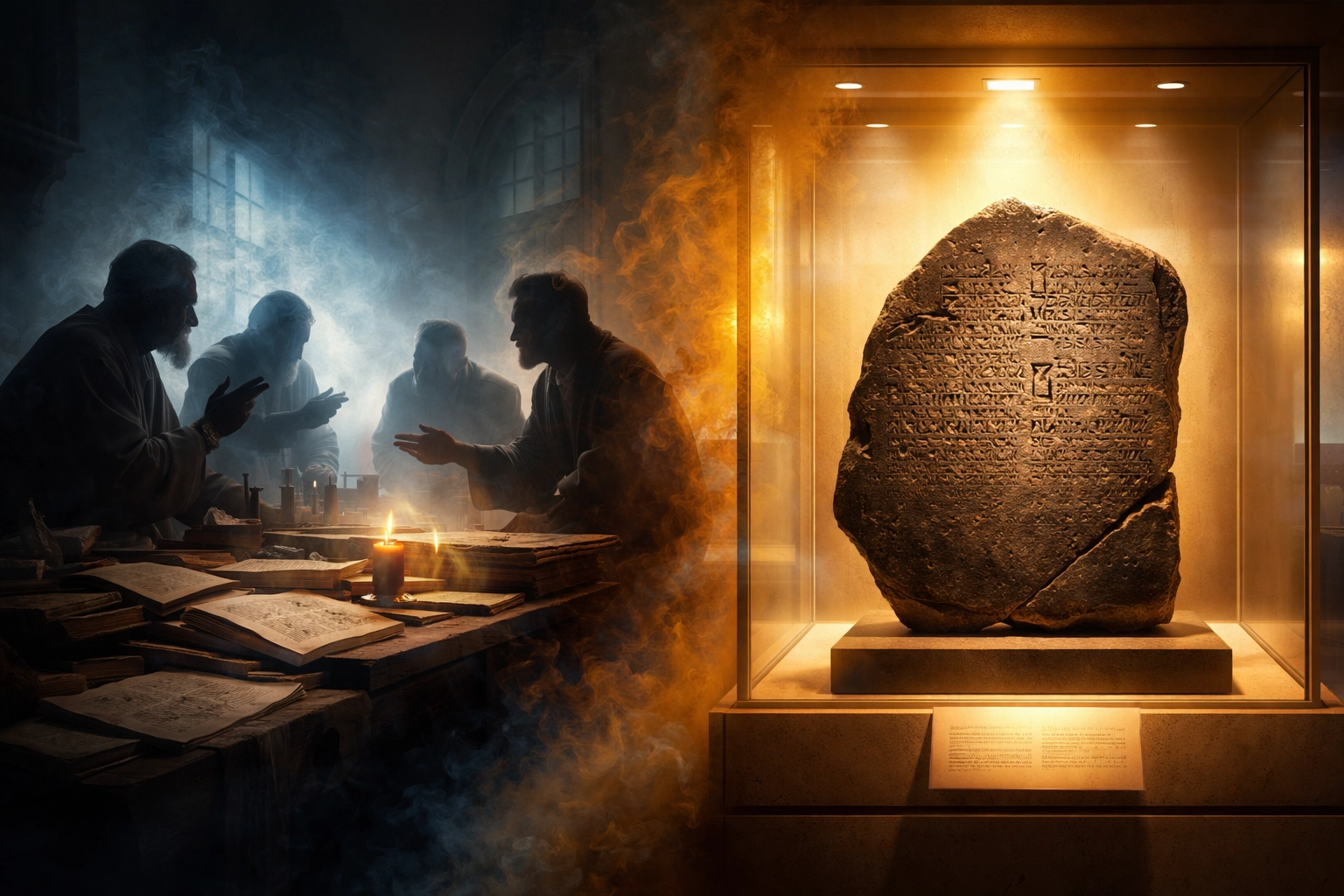
Some scholars went further. They argued that the entire narrative of the united monarchy under David and Solomon was a fabrication, invented centuries later to give the small kingdom of Judah a sense of legitimacy and grandeur.
The Tel Dan Stele didn’t just challenge that view. It demolished it.
Here was independent verification from one of Israel’s enemies, written more than a century after David’s death, treating David’s dynasty as an established historical fact. The inscription wasn’t trying to prove David existed: it simply assumed everyone already knew he did.
That’s powerful evidence. It’s one thing for friends to praise you. It’s another thing entirely when your enemies acknowledge your legacy.
The Shift in Academic Thinking
I don’t want to overstate the case. Archaeology rarely settles debates overnight, and scholars love to argue. But the Tel Dan Stele fundamentally shifted the conversation.
Before the discovery, the “David as myth” position was academically respectable. After 1993? Not so much.
Professor William Dever, one of the most prominent archaeologists working in the region, noted that the stele effectively ended the debate over David’s historicity. Other scholars followed. While arguments continue about the extent of David’s kingdom or the details of his reign, the core question: “Did David exist?”: was answered.
Yes. He did.
The “House of David” wasn’t a fairy tale. It was a recognized political entity that Israel’s neighbors knew by name and identified by its founder.
What This Means for Faith
Now, I want to be careful here. I’m not suggesting that our faith should rise or fall based on archaeological discoveries. Faith, by definition, involves trusting in things we cannot fully prove. As the writer of Hebrews put it, faith is “the substance of things hoped for, the evidence of things not seen.”
But here’s what I find encouraging: when we do examine the evidence, when we put the Bible’s historical claims to the test, it holds up remarkably well.

The Tel Dan Stele is just one example. We have the Cyrus Cylinder confirming the Persian decree that allowed Jews to return from exile. We have the Pilate Stone verifying the existence of the Roman governor who sentenced Jesus. We have the Dead Sea Scrolls demonstrating the remarkable preservation of Scripture over millennia.
None of these discoveries prove the spiritual claims of the Bible. They can’t prove that God spoke to prophets or that Jesus rose from the dead. But they do demonstrate that the Bible is rooted in real history, real places, and real people.
And that matters.
When Scripture says David was a man after God’s own heart, it’s talking about a real man who walked real streets and faced real struggles. When it records his triumphs and his failures: and there were plenty of both: it’s giving us history, not fiction.
Testing the Evidence
This is exactly why I love exploring these topics. I spent years studying theology after leaving my career in engineering, and one thing I learned is that faith and evidence aren’t enemies. We don’t have to check our brains at the door when we open the Bible.
The Tel Dan Stele reminds me that the biblical writers weren’t spinning tales in a vacuum. They were documenting events that their contemporaries and even their enemies recognized as real.
So the next time someone tells you that David was just a myth, you can smile and tell them about a hot summer day in 1993 when a team of archaeologists found a broken stone that changed everything.
The evidence is there. And it’s worth exploring.
This is the first in a series where I’ll be diving into specific archaeological discoveries and what they mean for our understanding of Scripture. Next week, we’ll look at the Cyrus Cylinder: a 2,500-year-old artifact that confirms one of the most remarkable stories in the Old Testament. Stay curious, friends.
