I’ve spent the better part of my life looking for evidence. Maybe it’s the old civil engineer in me, but I’ve always been someone who needs to see how the foundations are laid before I trust the building. When I left my career in IT and engineering to study theology, I didn't leave my logic at the door. If anything, I brought a magnifying glass with me.
For years, critics of the Bible have played a very specific game. They’ll tell you that the stories of Jesus were legends that "evolved" over centuries. They claim that the idea of Jesus as a miracle worker or a divine figure was something the early church cooked up 150 or 200 years after the fact. But every now and then, the earth: or in this case, the ocean: gives up a secret that pulls the rug right out from under that theory.
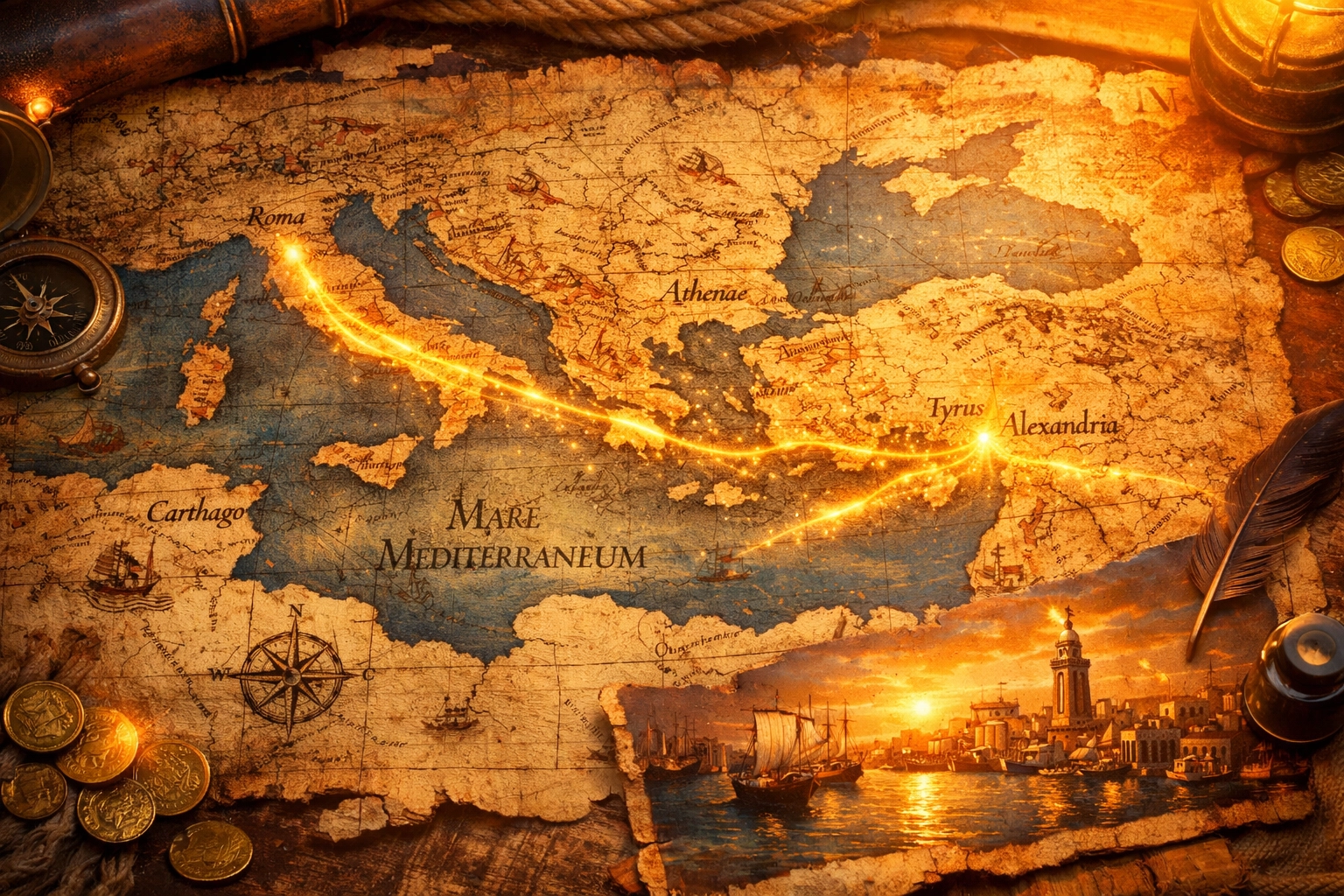
In 2008, a French marine archaeologist named Franck Goddio was diving in the submerged ruins of the Great Harbor of Alexandria, Egypt. He wasn't necessarily looking for "Jesus." He was mapping out the sunken palace of Cleopatra and the ancient island of Antirhodos. But sitting there, preserved in the silt of two millennia, was a small, unassuming ceramic bowl.
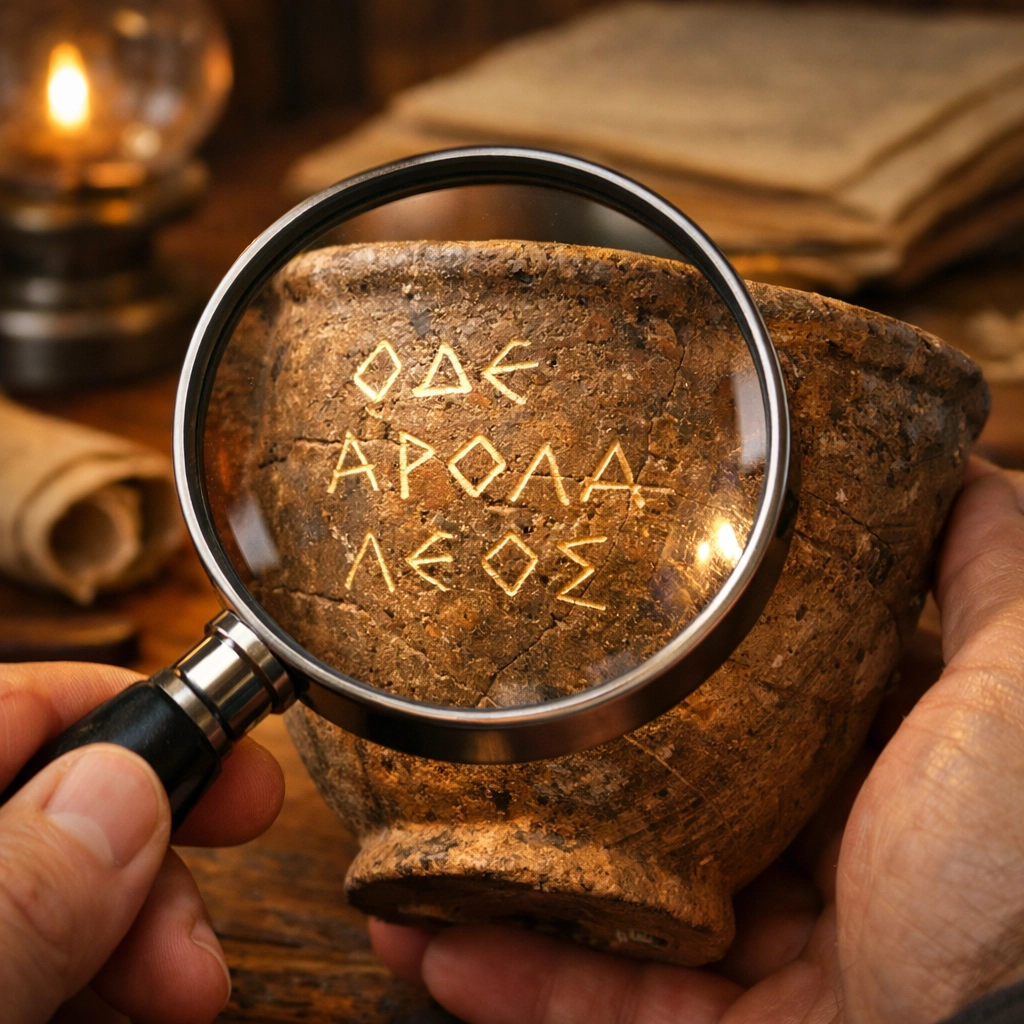
On the side of this bowl was a Greek inscription. And if the dating is correct, this little cup might just be the oldest physical piece of evidence we have for the existence and reputation of Jesus Christ.
The Discovery in the Deep
Alexandria in the first century was the New York City of the ancient world. It was a melting pot of philosophy, science, Egyptian mysticism, and Roman power. It was a place where ideas didn't just stay put; they collided and spread like wildfire.
When Goddio brought this bowl to the surface, he realized he had found something unique. The inscription, scratched into the surface in Greek, read: "DIA CHRSTOU O GOISTA."
Translated roughly, it means "By Christ the magician" or "By Christ the chanter/soothsayer."
Now, before you get caught up on the word "magician," we need to talk about the timeline. Archaeologists and epigraphists dated this bowl to approximately 50 AD.
Stop and think about that for a second. If Jesus was crucified around 30-33 AD, and this bowl was being used in Alexandria by 50 AD, we are looking at a gap of only 20 years. That is an absolute blink of an eye in archaeological terms. To put that in perspective, 20 years ago was the mid-2000s. We remember that like it was yesterday.
This isn't a legend that took centuries to grow. This is a real-time reaction to a person whose name was already crossing international borders within two decades of His death.
Why Call Him a "Magician"?
For many believers, the word "magician" feels like an insult. We think of stage tricks or deception. But we have to look at this through the eyes of a pagan living in Alexandria in 50 AD.
To a person who wasn't a Jew and didn't understand the Messianic prophecies of the Old Testament, the stories coming out of Judea were mind-blowing. They were hearing about a man who gave sight to the blind, walked on water, and rose from the dead. In the Greco-Roman world, if you did those things, you were called a goēs: a practitioner of supernatural power, a "magician."
The fact that the bowl calls Him a "magician" is actually one of the strongest pieces of evidence that the miracles described in the Gospels were being talked about immediately. It shows that the "brand" of Jesus, so to speak, wasn't just a moral teacher or a philosopher. From the very beginning, His identity was tied to the supernatural.

If Jesus had just been a nice guy who told people to love their neighbors, a pagan in Egypt wouldn't be inscribing His name on a ritual bowl to invoke "magic." They were trying to tap into the power they had heard He possessed. It confirms that the Gospel accounts of Jesus doing things people couldn't explain were the primary reason His name was spreading.
The Timeline Problem for Skeptics
This is where the engineering side of my brain gets excited. History is built on timelines.
The traditional skeptical view is that the New Testament was written so long after the events that "mythical" elements were added later. But here we have a physical artifact from 50 AD. This is right around the same time the Apostle Paul was writing his first letters. It’s years before many scholars think the Gospels were even penned.
This tells us two things:
- The spread of the message was nearly instantaneous. The "faith" didn't crawl out of Jerusalem; it sprinted.
- The message was consistent. Even in a pagan context like Alexandria, the core identity of "Christ" (Christos) as a source of power was already established.

I’ve traveled to dozens of countries, and I’m always amazed at how fast news travels today with the internet. But back then? For a name to travel from the dusty streets of Jerusalem, across the Mediterranean, and into the ritual life of an Egyptian resident within 20 years? That takes more than just a good story. It takes a movement that has completely disrupted the status quo.
The Debate: "Chrestos" vs. "Christos"
Now, to be fair and investigative, we have to look at the other side. Skeptics will often point out that "Chrestos" was a common name in the Roman world, often given to slaves, meaning "good" or "useful." They argue that maybe this bowl just belonged to a guy named Chrestos who happened to be a magician.
But here’s the problem with that theory: the context of the inscription.
The phrase "By Christ the magician" (or "Through Christ the magician") is structured as an invocation. In the ancient world, you didn't usually write "By Joe the Plumber" on a ceremonial bowl unless you were trying to use that person's authority or power. The use of "Christos": which means "Anointed One": in conjunction with "Goista" (one who works with the supernatural) points directly toward the figure of Jesus, who was the only "Christ" being credited with these kinds of wonders at the time.
Even secular historians like Suetonius, writing a few decades later, confused the spelling, referring to "Chrestus" as the one instigating the Jews in Rome. The spelling variation was common, but the person they were referring to was unmistakable.
Testing the Evidence
In The Faith Experiment, we’re always looking to see if the Bible holds up under pressure. When we look at the "Jesus Cup," we aren't just looking at a piece of pottery. We are looking at a witness.
Think about the geography. Alexandria was the intellectual capital of the world. If the story of Jesus was a poorly constructed lie, it would have been torn apart in a place like Alexandria. Instead, we find the name of Christ being etched into the very fabric of the city's daily and ritual life within the lifetime of the people who actually saw Him.
I often think about my own journey. After 9/11, I was searching for something solid. I didn't want a "feeling"; I wanted the truth. Seeing things like the Alexandria bowl reminds me that our faith isn't based on "once upon a time." It’s based on "at this place, at this time, this happened."
Diving for the Truth
Whether you call it magic or miracles, one thing is clear: by 50 AD, people in Egypt were already talking about "Christ." They were fascinated by Him. They were trying to understand the power that seemed to follow His name.
The Alexandria bowl is a tiny window into a world that was being turned upside down by a Man from Nazareth. It reminds us that the history is there if you’re willing to dive for it. You don't have to take my word for it, and you don't have to rely on blind faith. The stones: and the cups: are crying out.
Every discovery like this is another piece of the puzzle. It’s another data point that suggests the Gospels weren't the result of a long game of "telephone," but were eyewitness accounts of a reality so powerful it couldn't be contained in Judea.
Let's keep looking at the facts. Let's keep digging. Because the more we find, the more the foundation seems to hold.
Let’s keep testing.
