If you’ve spent any time studying Bible prophecy, the word “Megiddo” probably does one of two things to your heart rate: it either sends it through the roof or makes you lean in with intense curiosity. We know it better as the root for Armageddon. For centuries, this dusty valley in northern Israel has been the site of legendary battles, the rise and fall of kings, and the focal point of end-times discussions.
But back in 2005, something happened at Megiddo that didn’t involve a military conflict or a prophetic timeline. It involved a prison, a shovel, and a woman named Akeptous who had been forgotten by history for nearly 1,800 years.
As part of The Faith Experiment, I’m always looking for those moments where archaeology steps out of the dirt and looks us right in the eye, challenging what we think we know about the “evolution” of Christianity. And the Megiddo Mosaic: specifically the “Western Inscription”: is one of the most explosive pieces of evidence we have.
It’s a story about a table, a Roman soldier, and a bold declaration of faith that was written long before the world thinks it was “allowed” to be said.
The Church Inside the Prison
The discovery didn’t happen in a pristine cathedral or a high-end museum. It happened inside the Megiddo Prison. The Israeli government wanted to expand the facility, and as is standard practice in a land where you can’t swing a cat without hitting an artifact, they called in the archaeologists from the Israel Antiquities Authority.
They expected to find some old walls or maybe some pottery. What they found instead was a massive, 500-square-foot mosaic floor belonging to a Christian prayer hall (or domus ecclesia) dating back to roughly 230 AD.
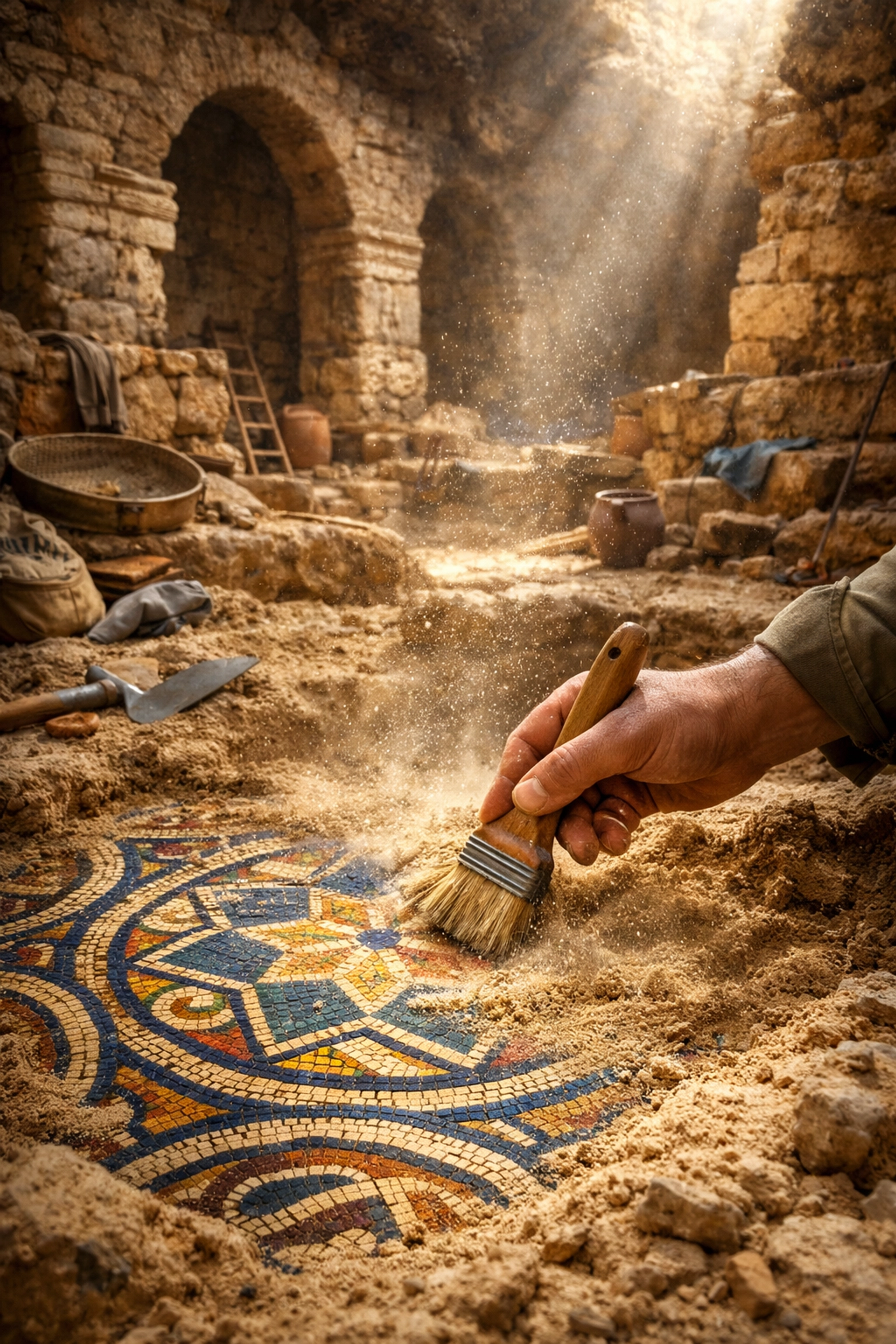
To put that in perspective: this is nearly a century before the Roman Emperor Constantine legalized Christianity with the Edict of Milan (313 AD) and even longer before the famous Council of Nicaea (325 AD).
For years, a common “skeptic’s” argument has been that the early followers of Jesus didn’t actually believe He was God. The theory goes that the “divinity of Christ” was a later invention, cooked up by politicians and bishops in the 4th century to unify the Roman Empire. But the Megiddo Mosaic: and the woman who funded part of it: tells a completely different story.
“To God Jesus Christ”
When the team uncovered the “Western Inscription” on the floor, they found a beautiful Greek text. It was a dedication that hit the theological world like a freight train. It reads:
“The God-loving Akeptous has offered the table to God Jesus Christ as a memorial.”
Let that sink in for a second. In 230 AD, while Christianity was still technically an illegal, underground movement often facing waves of Roman persecution, a woman named Akeptous was so confident in her faith that she paid for a permanent stone memorial calling Jesus “God” (Theos).
The Greek phrase used is “Tou theo Iesou Christou.” There’s no ambiguity here. There’s no “great teacher” or “spiritually enlightened man” hedging. She called Him God.
This is some of the earliest archaeological proof of Jesus being worshipped as divine that has ever been pulled from the earth. It shatters the idea that the divinity of Jesus was a 4th-century “add-on.” For Akeptous and her community at Kfar Othnay (the ancient name of the site), Jesus wasn’t just a historical figure; He was the object of their worship.
The Mystery of the Table
The inscription specifically mentions that Akeptous “offered the table.” Now, when we think of a church today, we think of pews and a pulpit. But in the early 3rd century, the center of worship wasn’t a stage: it was a table.
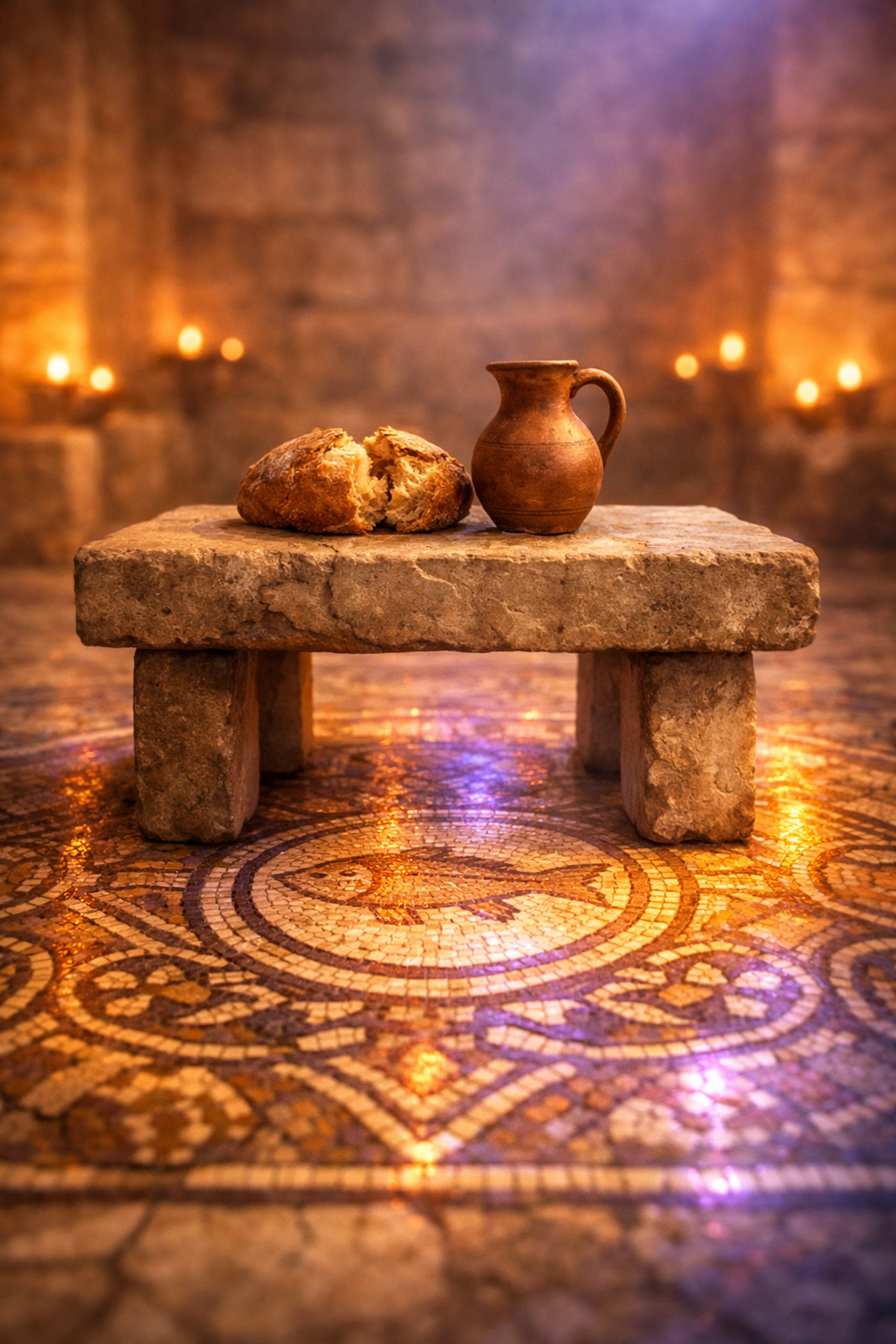
This was likely a communion table or an altar where the early believers gathered to celebrate the Lord’s Supper. The Greek word for “table” here is the same one Paul uses in 1 Corinthians 10:21 when he talks about the “table of the Lord.”
Akeptous wasn’t just donating a piece of furniture; she was providing the focal point for the most sacred act of the early church. She was “setting the table” for her brothers and sisters to meet with their Savior.
An Unlikely Partnership: The Roman Centurion
If a woman calling Jesus “God” in 230 AD wasn’t enough to make you pause, the rest of the mosaic adds another layer of intrigue. Another inscription on the floor mentions that the mosaic itself was paid for by a man named Gaianus.
But Gaianus wasn’t just any guy. The text describes him as a centurion: a Roman military officer. Specifically, he was likely part of the Legio VI Ferrata, the “Ironclad” Sixth Legion, which was stationed right there at Megiddo.
Think about the tension in that room. You have a Roman officer, a representative of the very empire that had executed Jesus and was currently outlawing His followers, digging into his own pocket to fund a beautiful floor for a Christian prayer hall.
It shows us that the Gospel was doing exactly what it was designed to do: breaking down walls. It was reaching the hearts of the elite Roman military and the “God-loving” women of the local community, bringing them together around a shared table. It’s a vivid picture of the New Testament’s “historical bible evidence” coming to life.
The Five Women of Megiddo
Akeptous wasn’t alone. The mosaic actually memorializes four other women: Primilla, Cyriaca, Dorothea, and Chreste.
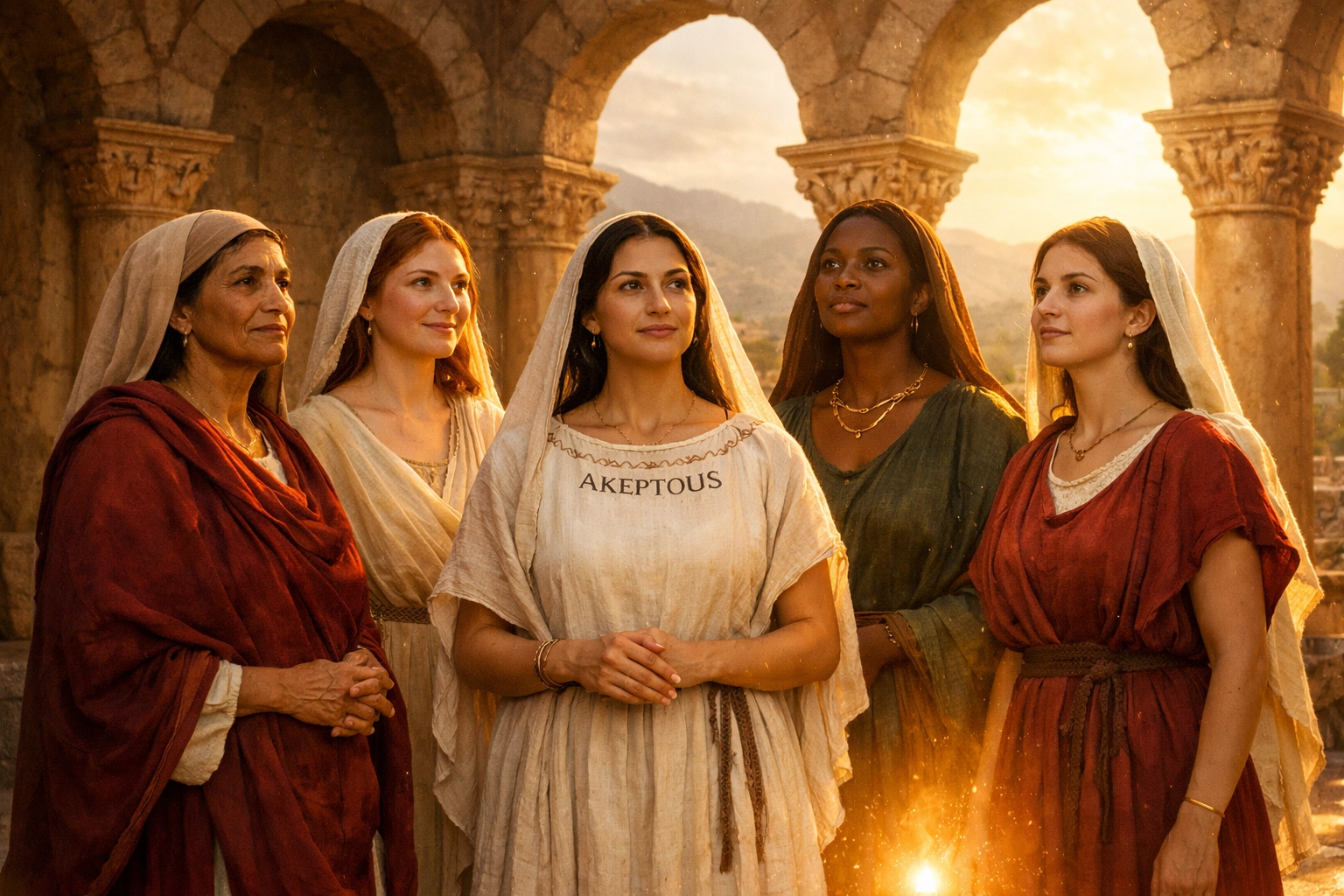
History often overlooks the role of women in the early church, but the archaeology here screams for our attention. These women weren’t just quiet observers in the back of the room. They were the backbone of the congregation. They were donors, memorialized figures, and leaders of faith who ensured that the community had a place to worship.
In a society where women often had very little public voice, the early Christian movement gave them a seat at the table, literally.
Why This Matters for Us Today
I’m often asked why I spend so much time looking at old stones and Greek inscriptions. It’s because faith isn’t just a feeling; it’s grounded in history. When someone tells you that the New Testament is a collection of legends that changed over centuries, you can point to Megiddo.
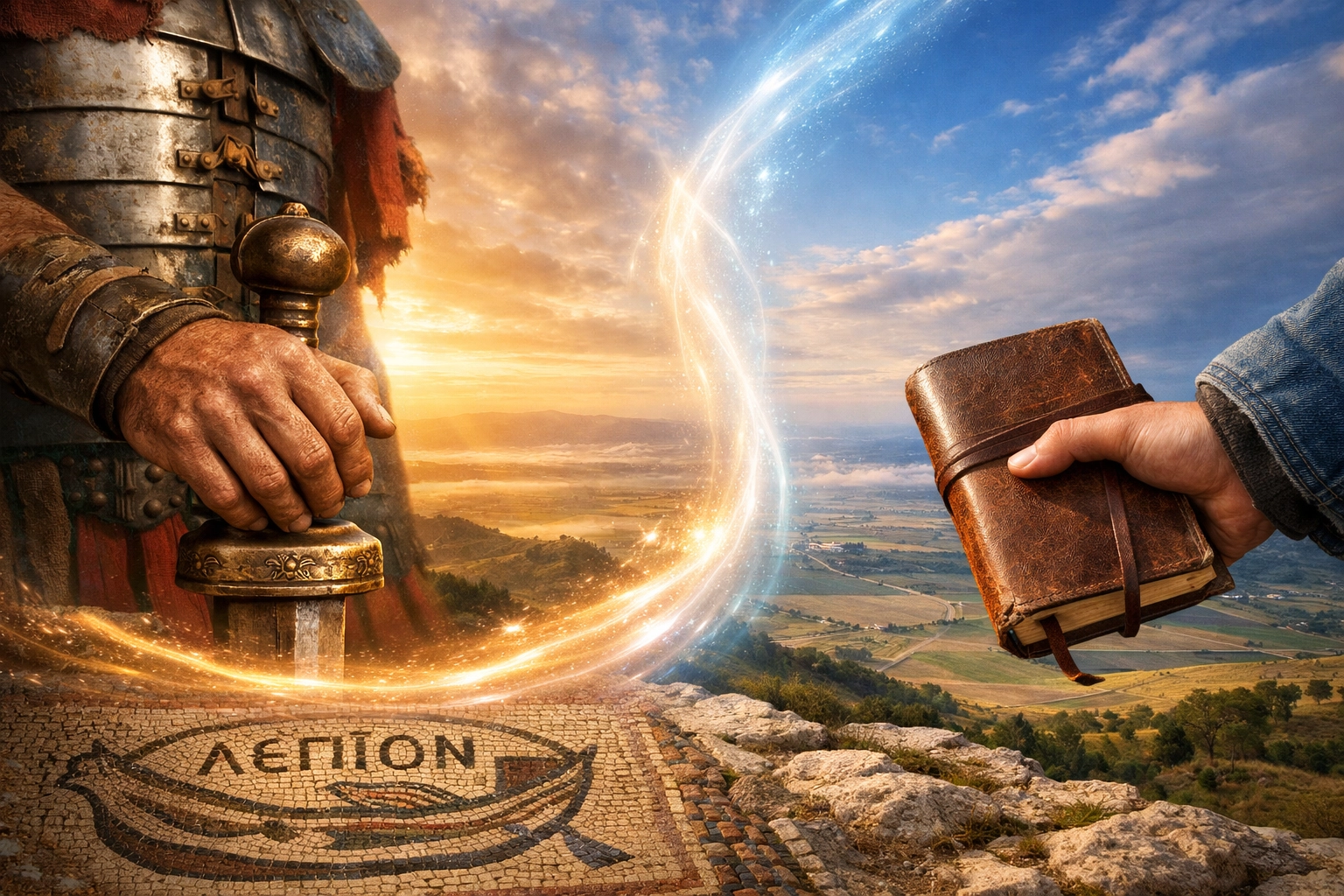
We see a “Faith Experiment” that was already 200 years old by the time this mosaic was laid down, and the results were clear:
- Jesus was worshipped as God from the very beginning.
- The Gospel was inclusive, reaching Roman soldiers and wealthy women alike.
- The early church was organized and committed, creating permanent spaces for worship even under the shadow of the Roman Eagle.
Megiddo might be the site associated with the end of the world, but this mosaic reminds us of a beautiful beginning. It reminds us that long before the creeds were written in stone at Nicaea, they were written in the hearts (and on the floors) of people like Akeptous.
She set the table for a community of believers 1,800 years ago. Today, as we look at the evidence, we’re still invited to pull up a chair and see the truth for ourselves.
The dirt doesn’t lie, friends. And at Megiddo, it’s telling us that Jesus was Lord long before the world caught up to the fact.
