Have you ever held something ancient in your hands? Maybe it was a coin from centuries past, a faded photograph of your great-grandparents, or a family heirloom that connected you to people you never met. There's something powerful about tangible evidence: something that whispers, "This really happened. These people really lived."
For many of us navigating faith in the 21st century, the Bible can sometimes feel distant. Ancient names, faraway places, events that happened thousands of years ago. It's easy to wonder: Is any of this actually real? Did these people really exist? Did these events actually occur?
Here's where archaeology becomes an unexpected gift to the modern believer.
Why Dirt and Dust Matter for Faith
At Hope Channel International, we believe that faith isn't about checking your brain at the door. God invites us to love Him with all our heart, soul, and mind (Matthew 22:37). That means asking hard questions. It means looking for evidence. It means being willing to dig: sometimes literally.
Archaeology is the study of human history through excavation and analysis of artifacts, structures, and other physical remains. And over the past two centuries, archaeological discoveries in the Middle East have consistently illuminated the biblical narrative in remarkable ways.
This isn't about "proving" God exists with a shovel and a brush. Faith will always require trust. But what archaeology does offer is corroboration: external evidence that the people, places, and events described in Scripture existed in actual history.
And that matters more than you might think.
Ancient Discoveries That Changed Everything
Let's walk through a few discoveries that have profoundly impacted how we understand the Bible's historical reliability.
The Dead Sea Scrolls
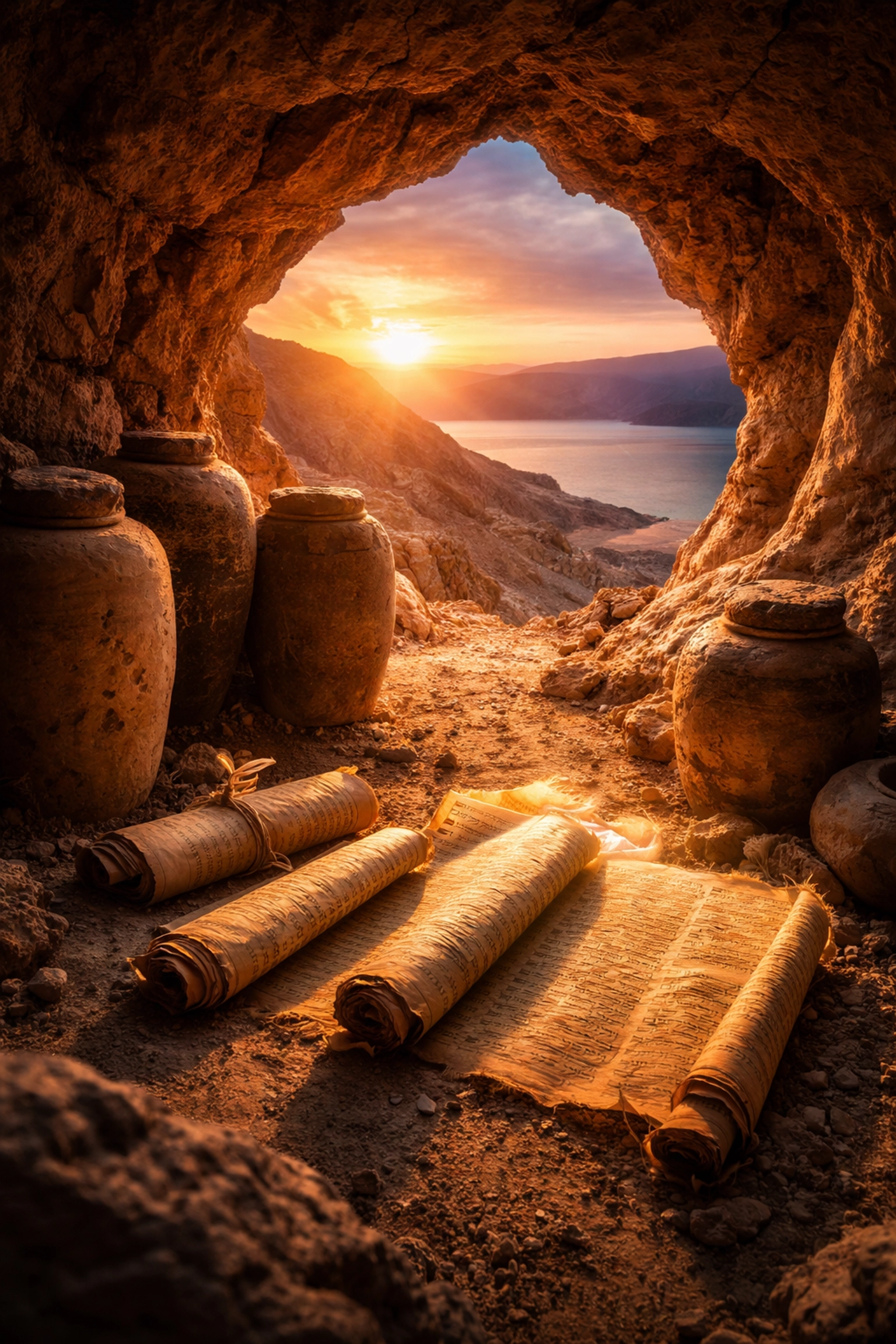
In 1947, a Bedouin shepherd stumbled upon clay jars in caves near Qumran, along the shores of the Dead Sea. Inside those jars were scrolls: ancient manuscripts of the Hebrew Bible dating back more than 2,000 years.
Why does this matter? Before the Dead Sea Scrolls, the oldest Hebrew manuscripts of the Old Testament dated to around 900 AD. Critics argued that centuries of copying had surely corrupted the text. What we read today couldn't possibly match what was originally written.
The Dead Sea Scrolls shattered that argument.
When scholars compared the ancient Isaiah scroll (dated to approximately 150 BC) with the Masoretic text used a thousand years later, they found remarkable consistency. The scribes who copied Scripture did so with extraordinary care and precision.
The Word of God had been preserved: just as Isaiah 40:8 promised: "The grass withers, the flower fades, but the word of our God stands forever."
The Tel Dan Stele
For years, critics claimed King David was a mythical figure: a Hebrew legend, not a historical king. There was no evidence outside the Bible that David ever existed.
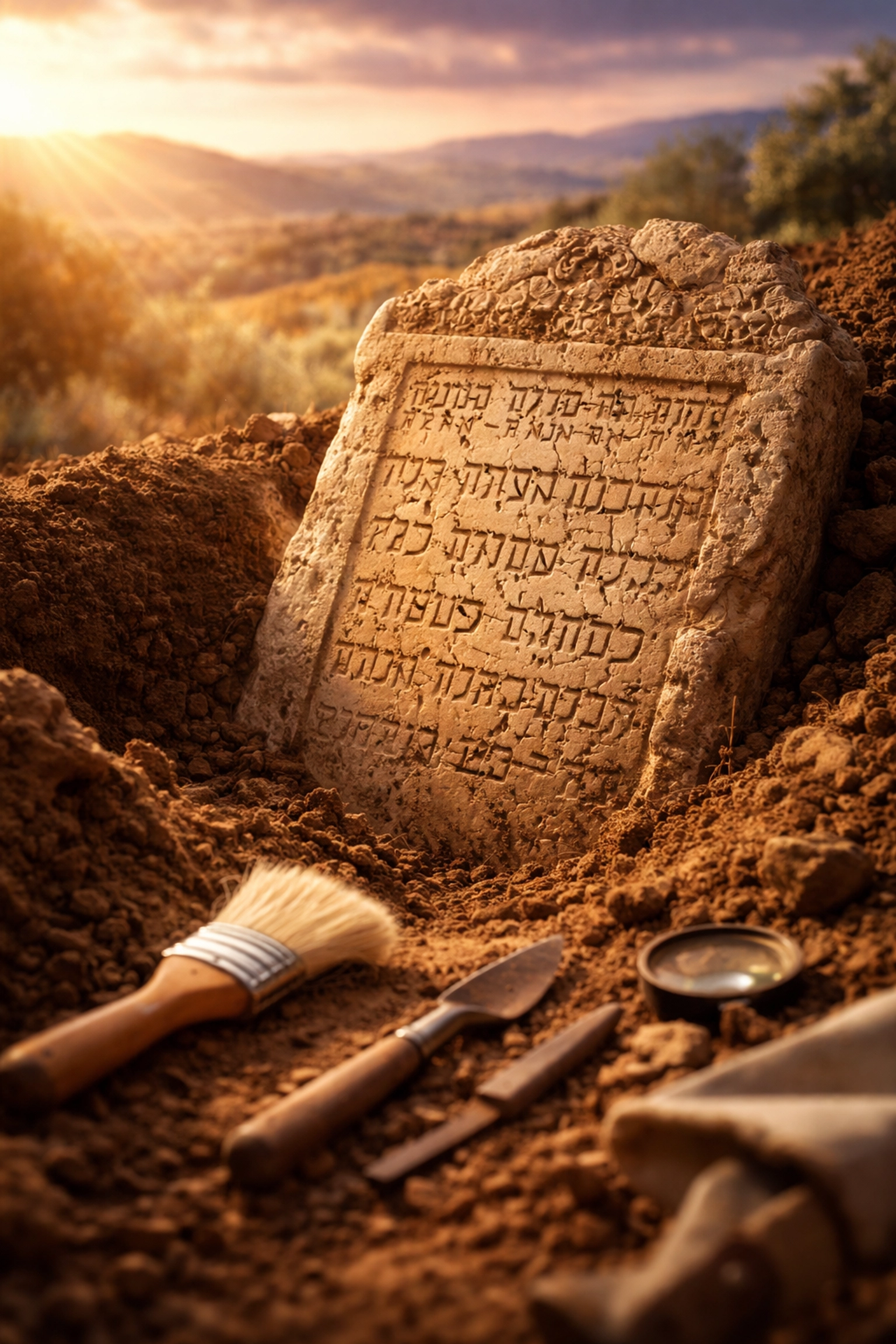
Then in 1993, archaeologists excavating Tel Dan in northern Israel uncovered a stone inscription. The text, written by an Aramean king, referenced the "House of David": an unmistakable reference to David's royal dynasty.
This was the first extra-biblical confirmation of King David's existence. A man once dismissed as legend now had historical verification carved in stone.
The Pilate Stone
Pontius Pilate: the Roman governor who sentenced Jesus to crucifixion: appears throughout the Gospels. But for centuries, no archaeological evidence confirmed his existence.
In 1961, during excavations at Caesarea Maritima, workers uncovered a limestone block inscribed with Pilate's name and title. The "Pilate Stone" now sits in the Israel Museum in Jerusalem, a silent witness to the man who asked Jesus, "What is truth?" (John 18:38).
These aren't isolated discoveries. From the Pool of Siloam (where Jesus healed the blind man in John 9) to the walls of ancient Jericho, archaeology continues to unearth evidence that aligns with the biblical record.
History as an Anchor for Modern Faith
So why does any of this matter for your faith today?
We live in an age of skepticism. Questions abound. Doubt is common. And honestly? That's okay. God isn't afraid of our questions. He's big enough to handle our doubts.
But He also provides anchors.
The writer of Hebrews describes faith as "the substance of things hoped for, the evidence of things not seen" (Hebrews 11:1). Notice that word: evidence. Biblical faith isn't blind belief in the face of contradictory facts. It's trust grounded in what God has already revealed: through Scripture, through history, and yes, through the dust and stones of ancient civilizations.
When you stand at an archaeological site in Israel, when you see the remains of a first-century synagogue where Jesus might have taught, when you touch stones that were carved before Christ was born: something shifts. The Bible isn't just a collection of spiritual ideas. It's rooted in real geography, real history, real people.
And that changes everything.
Testing Faith: The Work of Robbie Berghan
This intersection of evidence and belief is exactly what Robbie Berghan explores through The Faith Experiment. As a host, author, and Bible teacher, Robbie has spent over 15 years traveling to six continents, presenting Bible-based lectures in more than 20 countries.
His journey into ministry began in the shadows of 9/11. What was once a career in civil engineering and information technology transformed into a calling to share hope through the lens of history, prophecy, and archaeology.
The Faith Experiment invites seekers and believers alike to test their faith: not to abandon it, but to strengthen it. To ask hard questions. To examine the evidence. And ultimately, to discover that the God of the Bible isn't hiding from scrutiny. He welcomes it.
As Robbie often reminds audiences: the same God who spoke through ancient prophets is still speaking today. History isn't just a record of the past: it's a roadmap pointing toward the future.
Why This Matters for Hope Channel
At Hope Channel International, our mission is to share the everlasting gospel with the entire world. We do that through media: through programs, documentaries, testimonies, and stories that inspire faith.
But we also recognize that faith grows in different ways for different people. Some encounter God through worship. Others through community. And some: especially those in post-Christian societies or secular cultures: need to see the evidence first before they can trust.
Archaeology offers a bridge. It says to the skeptic: "Look. These aren't fairy tales. This history is real."
And once the history is established, the door opens for something deeper: an encounter with the living God who stepped into that history to rescue us.
That's the beauty of ancient discoveries. They don't just tell us about the past. They point us toward hope for the future.
An Invitation to Dig Deeper
Maybe you've struggled with doubt. Maybe the Bible has felt distant or irrelevant. Maybe you've wondered if faith is just wishful thinking.
Can I encourage you? Don't run from the questions. Lean into them. Explore the evidence. Let archaeology and history strengthen your trust in God's Word.
As Jesus said to Thomas, who needed to see the evidence of His resurrection: "Blessed are those who have not seen and yet have believed" (John 20:29). But notice: Jesus didn't rebuke Thomas for wanting proof. He met him where he was.
God meets us where we are too.
Whether through an ancient scroll, a carved stone, or a story of hope shared through our programs, the evidence is there for those willing to look.
The archaeology of faith isn't about digging up certainty. It's about discovering that the God who acted in history is still at work today: and He's inviting you to be part of His story.
